 |
Financial news |
|
A EUR 37 million subsidy from the Agriculture and Rural Development Committee of the European Parliament for Bulgaria will be used for renewable energy projects, water management and the dairy sector. The funds are part of a EUR 200 billion anti-crisis economy stimulus measure voted by the European Union at the end of last year. Brussels allocated a total of EUR 1 billion for development of the rural regions via broadband internet, green projects, water management, milk processing etc. The EU decision was taken only a week after Bulgaria's environment minister Nona Karadzhova suggested a six-month moratorium on green energy production projects. Source: Pari
The Bulgarian government is considering tapping its BGN 8 billion fiscal reserve to pay down outstanding debts to private companies, finance minister Simeon Djankov said. Speaking on Wednesday at a session of the consultancy council under regional development minister Rosen Plevneliev and construction organisations, Djankov dubbed such a move the most realistic scenario that he said could be implemented at the beginning of 2010. The method and the timescale of the payment, a last-ditch effort to reduce the government’s mountain of debt to businesses, will be pinned down on December 23, when the two parties will seal an official agreement, said Roumen Yovchev, chairman of Roads industry chamber.
|
Companies |
|
The European Parliament has approved the EU budget for 2010. It gives Bulgaria a green light to additional compensations on the decommissioned four units of Kozloduy NPP. Out of the negotiated 300 million euro compensations for Bulgaria, 75 million euro are provided in the EU budget for 2010. The rest of the funds will be paid in parts till 2014. So far, Bulgaria has received a total of 550 million euro of compensation for Kozloduy NPP pre-term closure of units.
Heat Supply-Sofia will have to invest about EUR 280 million in a modern 400-megawatt cogeneration facility to be able to sell electricity at preferential prices. The same holds true for all other heating utilities that have low-efficiency cogeneration facilities. From 2010 they will not receive preferential prices if their electricity/heat cogeneration installations are not efficient, the CEO of Heat Supply-Pleven, Valentin Terziyski, said. The revocation of preferential prices will considerably increase heating rates, Heat Supply-Sofia's CEO Petko Milevski pointed out. Many utilities may opt out of electricity production, because it will not longer be profitable.
Currently most heating utilities rely on these revenues, Heat Supply-Burgas's CEO Valyo Duchev added. The utilities in Pleven, Burgas, Varna, Vratsa and Veliko Tarnovo have already invested in high-tech installations. Source: Pari
Edinburgh-based oil explorer Melrose Resources is on track to produce 40,000 barrels of oil a day next year as it brings two new Bulgarian gas projects on stream, the Scotsman reported. The FTSE 250 company was Bulgaria's largest producer of domestic gas for several years until 2008, when its Galata field in the Black Sea was exhausted. Most of the country's supplies come from Russian giant Gazprom. Next year, Melrose plans to spend USD 51 M bringing the Kavarna and Kaliakra fields into production in July and October. This move is expected to restore its Bulgarian production to 2007 levels. Source: Darik radio
Bulgaria’s troubled fertiliser maker Chimco will resume operations in October or November 2010, the plant’s new owner, construction entrepreneur Nikolay Galchev, told. The businessman said his holding company Galchev Engineering Group as acquired the plant, which has been dead for a few years, from Novo Chimco around five months ago. He revealed an agreement has been reached with the government, including a reschedule of the plant’s debt, Galchev said. Payments are scheduled to begin in May 2010. In end-2007, Novo Chimco got hold of the facility after paying BGN 85.7 million,
the amount t it owed to its creditors.
Businesses from the whole country can buy space in Stara Zagora's new industrial zone. Its construction was made possible by a municipal project approved under the PHARE programme worth BGN 1.653 million. The first sod was turned in June. Contractor for the construction works is Primastroy and consultant is Industrial Infrastructure consortium, lead by Patkonsult-2000. After the implementation of the project we will develop industrial production, especially environmentally friendly one, mayor of Stara Zagora Svetlin Tanchev said. Construction rights are offered at a minimal fee for businesses. The municipality expects new jobs to be created in the future. Source: Pari
Hundreds of workers are out on strike for a second day in a row Thursday in one of Bulgaria’s largest military plants, VMZ Sopot. The workers have not been paid in three months as the heavily indebted state-owned factory faces bankruptcy. They are complaining that they don’t even have enough money to send their kids to school any more not to mention repaying their loans. “We currently work on three shifts, servicing a large order. We rely on this money in order to be able to pay the workers at least one monthly salary around December 23. After that we are going to pay them their other delayed salaries. But in order to do all that we need at least BGN 5 M,” the Director of the VMZ Sopot factory, Ivan Stoenchev said. Source: Darik radio
Express Service Ltd. delivered three small electric locomotives to the German company Hegenscheidt, said the manager of Rouse-based company Tsvetelin Kolev. Locomotives, powered by large batteries and electric motors, were developed by the Bulgarian company. The machines are manufactured in Rouse exclusively for the German partner of Express Service. Similar electro-lokomotives already operate in China, UK and Israel.
|


 Български









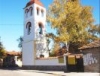 Radilovo is a village in the south part of Bulgaria. It is situated in the Municipality of Peshtera. Radilovo has ancient history, which began about 5000 years ago. Ancient mounds, old roads, a lot of working equipment, coins and weapons made of stone, copper, bronze and iron were found in the area of the village. It has been known with today’s name since the 15th or the beginning of the 16th century. In his books, Zahari Stoyanov mentions about the energetic participation of the local people in all the organizational and revolutionary activities during the April uprising in 1876. There is an old spring in the surroundings of Radilovo, called Chereshovo kladenche (Cherry well). According to the legend, everyone who is sick and drinks water from the well, and ties a black thread on a near tree, will get better shortly. In 1897 in the village, the Bulgarian journalist and writer Aleko Konstantinov was killed by mistake.
