Business Industry Capital
|
Bulgaria
|
|  | |
|

Price: 5 500 000 EUR
14,6 hectares, 3 warehouses (total area 1600 sq.m and height 11 m), cranes for loading and unloading operations (capacity 13 tons), administrative building (360 sq.m), warehouses, and operational shop with industrial focus.
Expert Advice
Contacts:
 0888 924185 0888 924185
 sfb@bia-bg.com sfb@bia-bg.com
BNB Exchange Rates
(20.03.2025) |
|---|
| |
EUR |
|
1.95583 |
|
| GBP |
|
2.32621 |
| USD |
|
1.79483 |
| CHF |
|
2.04094 |
| EUR/USD |
|
1.0897* |
|
ECB exchange rate |
|
Basic Interest Rate |
| |
as of 01.03 |
|
2.59% |
|
|
|
|
Financial news |
|
Bulgaria is among the EU countries with the strongest wage bill growth in the fourth quarter of 2024, Eurostat data shows. The most significant growth in wage bill per hour worked in the fourth quarter of the year was registered in Croatia (up 13.9% year-on-year), followed by Poland (13.8%) and Romania (13.1%), while Bulgaria is fourth with 13.0%. In the fourth quarter of 2024, hourly labor costs in the European Union increased by 4.3% compared to the same quarter of the previous year, and within the euro area - by 3.7%. Companies' labor costs include not only wages and salaries paid to employees, but also indirect labor costs - mainly social security contributions paid by the employer. In the euro area, hourly wages and salaries increased by 4.1%, while indirect labour costs increased by 2.6% and total labour costs increased by 3.7% in the fourth quarter of 2024 compared to the same quarter of the previous year. Across the EU, hourly wages and salaries increased by 4.7%, total labour costs by 4.35% and the non-wage component by 3.0%. Source: actualno.com
The National Audit Office has examined procedures and awards carried out under the Public Procurement Act (PPA) worth 139.9 million leva in 2024. The examined procedures under the PPA are 142 for a total of over 132.4 million leva, and the awards through collection of offers with an announcement or invitation to certain persons under the PPA are 89 and are worth over 7.4 million leva. 99 contracts for 21.6 million leva, concluded after a procedure or after awards through collection of offers with an announcement or invitation to certain persons, have also been examined. 153 acts have been drawn up to establish administrative violations under the PPA of heads of central departments, mayors or their deputies and other types of responsible persons. The administrative sanctioning body - the Chairman of the Court of Auditors - has ruled on 104 of them, with 67 penal decrees and 30 warnings issued, the court indicates. The total value of the fines imposed amounts to over 312,000 leva. Seven of the fines were imposed on heads of central departments, 49 - on mayors and their deputies, 11 - on other types of responsible persons. Agreements were concluded on the basis of the Administrative Violations and Penalties Act for three of the acts drawn up. For comparison, the Court of Auditors indicates that in 2023, 53 penal decrees were issued, the fines imposed were for 278,000 leva, and in 2022 - 13, with the total value of the fines being 77,487 leva. The most common violations of the Public Procurement Act, for which administrative criminal proceedings have been initiated, are related to setting conditions that unreasonably restrict or unreasonably give an advantage when participating in the public procurement; to approved indicators in the tender evaluation methodologies that do not allow for the assessment of the level of performance proposed in the tenders and for objectively comparing the proposals of the participants, as well as not providing sufficient information to the participants about the rules for evaluating the tenders. In other violations, contracting authorities have not applied the prescribed legal procedure despite the existence of grounds for this; public procurements have been divided into parts in order to apply an award procedure for lower values; non-competitive procedures have been chosen (negotiation without prior notice and direct negotiation) without the prerequisites regulated in the Public Procurement Act being met; documents and information subject to publication in the Public Procurement Register have not been sent within the statutory deadline. Source: actualno.com
|
Companies |
|
The Greek energy company PPC Group is starting the construction of a new photovoltaic power plant in Bulgaria. The Coliseum solar park will be located in the Stara Zagora region, with a maximum output power of 165 MWp. An energy storage battery with a nominal capacity of 25 MW and a power of 55 MWh will be built to it, which will be completed together with the plant. The connection of the new project to the electricity system will be carried out through a new 33/110 kV substation located within the project boundaries. 260,000 modern bifacial solar panels will be used for the construction of the plant. The energy storage facility will use innovative liquid-cooled LFP batteries. The annual energy production from the project is expected to exceed 265 GWh, which will satisfy the energy needs of more than 45,000 households. The operation of the project is expected to prevent the emission of approximately 133,000 tons of CO2 per year. The new PV park will be added to the existing 18 MW capacity of the Garda wind farm already operating in Bulgaria. It was built by DEI Group, a subsidiary of PPC Group. DEI Group has 208 MW of renewable energy projects already operating or under construction in the country. In addition, there is an additional 550 MW at various stages of development. Source: economy.bg
A private bailiff is selling at auction a modern factory in the village of Krumovo, Varna region, for processing sunflower seeds, producing peeled seeds, unrefined sunflower oil and pellets. The starting auction price is 5.364 million leva for 13.6 acres of property, in which three production buildings, three silos and a warehouse have been built. The owner of the factory is "Nik-Sot Group" Ltd - part of the "Agro Reserve" holding. The financial indicators of "Nik-Sot Group" show revenues until 2023, when from over 50.5 million leva in the previous year they collapse to 11.3 million leva, and the profit in 2022 of nearly 1 million leva turns into a 1.8 million leva loss. In 2024, garnishments were also imposed by banks. In 2023 the staff is reduced from 66 to 11 people, and currently there are only 5 insured persons. "Agro Reserve" is the bankrupt company with a starting date of insolvency on December 31, 2021 and a receiver has been appointed. Financial indicators show revenues of between 100 and nearly 130 million leva in the period 2015-2017, after which a sharp decline begins and in the last year for which there is data (2020) revenues are below 8 million leva, and the loss is almost a million. Currently, there is only one insured person. Nearly a decade ago, the name of "Agro Reserve" appeared in the media due to the company's participation in a consortium that wanted to acquire the closed commercial bank "Victoria". It also included "Lev Ins" and the Austrian holding company Kerbler. In the past year 2024, the project for the most innovative charging hub for electric vehicles in Bulgaria was implemented, providing its customers with the opportunity to pay directly with a bank card when charging. ABB Bulgaria delivered the charging stations for the project in partnership with its largest distributor in the field of charging infrastructure - "Megalan Power Management". Five charging stations were delivered on the territory of the charging hub, located in the city of Veliko Tarnovo. The implemented project was the work of the company "Tremol" Ltd and is located at the exit of Veliko Tarnovo in the direction of Sofia. The total installed capacity exceeds 1 MW. Additional power for the charging stations is also provided by a photovoltaic power plant located on sheds above the charging parking spaces, as well as on the company's production buildings nearby. In this way, fast and green charging is ensured. The total installed capacity of the photovoltaic power plant is over 600 kW. Tremol Ltd. has specially developed and built into its charging hub a system that makes direct payment by bank card possible on site. Source: economy.bg
Burgas Municipality will request from the state land on the territory of the former military airport in Ravnets for the construction of a car safety center. It is planned to build a training ground, a hall for training future drivers and conducting practical classes, in order to reduce road injuries. Together with the Association of the Bulgarian Aviation Industry, the possibility of building a specialized testing area for small unmanned aerial vehicles and drones is also being investigated. The requested land does not include the runway, which is currently state-owned. In 2018, the state provided the entire territory of the former airbase to Burgas Municipality free of charge. Burgas Hydrogen EAD had announced an investment of 130 million leva for the construction of a green hydrogen plant using the electrolysis method. The second company, Virtus Investment JSC, was ready to invest 594 million leva. leva for the implementation of a carbon-neutral zone, which includes a plant for the production of green hydrogen and various bases for the production and conversion of elements for the hydrogen industry. Although the court did not uphold the appeals filed, the investors abandoned the implementation of their projects. Now the Municipality of Burgas is making a new attempt to develop the area, which is extremely suitable for the establishment of a new industrial zone. Source: BNR
Slance Butovo JSC has announced an investment intention to build a photovoltaic power plant on the land of the Pavlikeni village of Butovo. The energy facility will be built on the company's own property - a plot of land with an area of 293,352 sq. m. It is planned to build a photovoltaic power plant in six stages with a nominal generated capacity of 24.6 MW. The facility will have solar panels mounted on a metal structure. High-efficiency modules will be used to convert solar energy, attached to a stationary two-row structure, built by mechanically driving a supporting structure directly onto the terrain of the property. Eight concrete complete transformer stations will be built. Source: Borba - Veliko Tarnovo
|
|
Bulgarian Industrial Association
|
| |
|
World
|
| |
|
Europe |
|
US President Donald Trump's policies are leading to the biggest security realignment in Europe since World War II, writes the European publication Politico in a commentary. According to the publication, it also provides a rare opportunity to move closer to federalism in the European Union (EU) against the backdrop of the increase in the community's total debt. The US president's demand that Europe take responsibility for its defense and provide security guarantees to Ukraine ultimately leads to the need for funds for defense investment, and this time things are happening unusually quickly. Just six weeks after Trump entered the White House, the European Commission has already presented a plan for a common financing of 150 billion euros, which will provide funds for the purchase of weapons. The funds will be raised by issuing common debt and the scheme will be the topic of discussions on Thursday (March 20) at the meeting of European leaders in Brussels. This is not the first time the EU has issued common debt - the union has already done so during the coronavirus pandemic. The funds raised are used to stabilize the economy, but reaching an agreement took five months of long and painful discussions. And the situation also seemed urgent. In the case of the rearmament plan, it seems that the 150 billion euros that Brussels is talking about will probably be just the first step. The idea of the common debt is for the EC to issue securities on the market - helped by the ability to raise funds on better terms than individual countries. Brussels will distribute the funds to the countries to buy weapons, and then - to return the loans to the EC. This time the chances of the talks going more smoothly are greater after the support of Germany - the country literally changed its position in days from restrained spending to increased investment in defense and infrastructure. Germany's position will mean a major change at the EU level. The EU is facing a "Hamilton Moment" - the first US Treasury Secretary Alexander Hamilton, who issued federal bonds in 1790 and with this move began to transform the US from a confederation divided by different measures and perspectives into the current federation with centralized policies. Common defense usually unites - even economists from the 18th and 19th centuries noted that countries do not necessarily have a common currency, but in order to defend themselves they need to have common positions. The reason this is still true today is the fact that weapons are expensive and defense requires greater efforts. However, there is a separate question of how this will be achieved - raising funds for pandemic recovery is one option. Regarding policies that require unity, the EU should also take into account Viktor Orbán's position. The talks are still ahead. Source: investor.bg
|
America |
|
U.S. housing starts rose more than expected in February after a weather-related slump, helped by a surge in single-family home construction, new data showed on Tuesday. New housing construction rose 11.2% to a seasonally adjusted annual rate of 1.5 million units last month, government data showed. New single-family home starts rose 11.4% to a seasonally adjusted annual rate of 1.11 million, the fastest pace in a year. Multifamily housing starts rose 10.7% after falling nearly twice as much the previous month. Homebuilding is recovering from a weak January when severe winter storms battered much of the South and Northeast. Construction activity in those regions rose last month, while it was more moderate in the West and fell in the Midwest. Builders are still struggling with a large backlog of unsold homes, and high borrowing costs are keeping many potential buyers away. This suggests that housing construction will remain a weak spot for the economy without further reductions in mortgage rates and more affordable housing. Building permits, a gauge of future construction, fell 1.2% to 1.46 million on an annualized basis. Single-family home permits fell 0.2%. Source: investor.bg
|
Asia |
|
Japan reported a trade surplus of 584 billion yen ($3.9 billion) in February, the Associated Press reported. Japan's exports rose 11.4 percent from a year earlier in February, while imports contracted slightly, leaving a surplus after two straight months of trade deficits as concerns about rising U.S. tariffs on imported goods grew. The world's third-largest economy had a 415 billion yen deficit last year. Exports totaled 9.19 trillion yen ($61 billion), while imports shrank 0.7 percent to 8.61 trillion yen ($57 billion). Imports rose nearly 17 percent from a year earlier in January. Japan's exports have surged in recent months as companies increased overseas shipments ahead of new U.S. tariffs. The higher tariffs imposed by President Donald Trump's administration on steel and aluminum imports have already taken effect, but the biggest threat to Japan's economy is tariffs on Japanese auto exports to the United States, which are set to take effect on April 2. Japan's exports to the United States rose 10.5 percent in February, while imports from the United States shrank 2.7 percent from the same month in 2024, posting a surplus of 918.8 billion yen ($6.2 billion). Exports to Asia in February rose about 16 percent from a year earlier, while those to Europe fell 4.5 percent. Food, machinery and vehicles accounted for a large share of the country's export growth. The central bank has been gradually raising its key interest rate to counter rising inflation, but Trump's tariff policies have increased uncertainty about the global economic outlook, as well as trade, the AP emphasizes. 
|
|
Indexes of Stock Exchanges
19.03.2025 |
| Dow Jones Industrial |
| 42 109.00 |
(135.50) |
| Nasdaq Composite |
| 17 750.00 |
(246.67) |
Commodity exchanges
19.03.2025 |
|---|
| |
Commodity |
Price |
|
| Light crude ($US/bbl.) | 67.05 |
| Heating oil ($US/gal.) | 2.1910 |
| Natural gas ($US/mmbtu) | 4.0610 |
| Unleaded gas ($US/gal.) | 2.1910 |
| Gold ($US/Troy Oz.) | 3 057.70 |
| Silver ($US/Troy Oz.) | 34.42 |
| Platinum ($US/Troy Oz.) | 1 009.10 |
| Hogs (cents/lb.) | 85.58 |
| Live cattle (cents/lb.) | 202.85 |
|
|
|
March 20 – International Francophony Day |
|
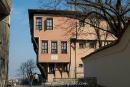
The first "sommet de la Francophonie" took place in Paris in 1986. About 44 countries took part in it.
They decided that March 20 would be the day of francophony worldwide. In December 1993, Bulgaria joined this worldwide organisation, which currently unites 58 countries.
Here are some historical links between France and BULGARIA:
- After the 1876 April uprising, the Turkish atrocities made the world turn its voice in defence of the Bulgarian people. Prominent statesmen, political and public figures, intellectuals and scholars to whom the Bulgarians would always be indebted, joined in a campaign for the Bulgarians' right to lead free life. The name of the French writer Victor Hugo stands out in this list.
- In 1838, another famous French writer A. de Lamartine, visited Plovdiv. He spent some time in the house of Georgi Mavridi. Currently, this house operates as a museum known as the Lamartine house. Various items related to the life of the French poet and politician are stored and exhibited in the museum.
- The first Bulgarian post stamps in 1879 were evalued in francs (because Bulgaria has not have her own currency).
- The first dirigible flight in Bulgaria took place near Plovdiv. It had a French-Bulgarian crew.
- France helped Bulgaria to create its fleet in the Black Sea.
|
|
Archive
Business Industry Capital |


 Български



