Business Industry Capital

|
България
|
|  | |
|

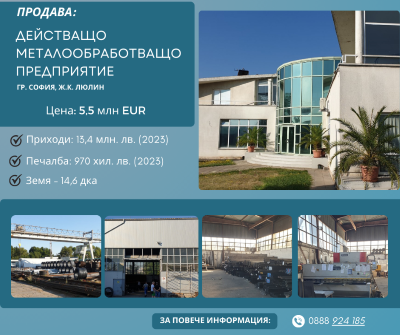
Цена: 5 500 000 EUR
Основни финансови показатели: приходи - 13,4 млн.лв (2023 г), печалба: 970 хил.лв (2023 г)
Земя: 14.6 дка на отлична локация (на 500 м. от спирка на метрото)
Оборудване: 3 халета (с обща площ 1600 кв.м и височина 11 м.), кранове за товарно-разтоварна дейност (подемност 13 т.). адм. сграда (360 кв.м), складове и действащ магазин с индустриална насоченост.
Съветите на експерта
Контакти:
 0888 924185 0888 924185
 sfb@bia-bg.com sfb@bia-bg.com

Цена: 2 800 000 EUR
1. Промишлени сгради:
• 2 производствени сгради със стоманобетонни конструкции (с обща застроена площ 8510 м²),
• Адм. сграда с 3 етажа, РЗП 2217 м²,
• Други: Работилница и 2 многофункционални сгради
2. Инфраструктура:
Отлична транспортна комуникативност, собствен водоизточник, 2 трафопоста и подземни електропроводи (110/20 kV),
Контакти:
0888 924185
sfb@bia-bg.com
Валутни курсове
(08.01.2025) |
|---|
| |
EUR |
|
1.95583 |
|
| GBP |
|
2.35884 |
| USD |
|
1.88187 |
| CHF |
|
2.07493 |
| EUR/USD |
|
1.0393* |
|
* определен от ЕЦБ |
|
ОЛП |
| |
от 01.01 |
|
2.95% |
|
|
|
|
Финансови новини |
|
Европейската инвестиционна банка (ЕИБ) отпуска на България 250 млн. евро за съфинансиране на подкрепени от Европейския съюз проекти за ускоряване на развитието на страната в сфери като енергийна ефективност, водоснабдяване, транспорт, изследователска дейност. Заемът е предназначен за проекти, които ще спомогнат за укрепването на българската икономика, повишаването на конкурентоспособността и подобряване на стандарта на живот. Финансирането от ЕИБ ще помогне на България да съфинансира инициативи, които са получили грантове от бюджета на ЕС за повишаване на енергийната ефективност на сгради и индустриални сектори, модернизиране на управлението на водите, стимулиране на бизнес проучванията, подобряване на жп транспорта, опазване на почвите и постигане на други цели. Специален фокус ще бъде поставен на проекти, които стимулират иновациите и дигитализацията, зеления преход на страната и подобряване на транспортната свързаност.Заемът е първият транш от предвидените за България 1 млрд. евро в бюджета на ЕС за периода 2021 - 2027 г. Със средствата могат да се финансират и сравнително малки проекти, които иначе не отговарят на условията за директно финансиране от ЕИБ. Националната здравноосигурителна каса (НЗОК) е отказала да плати и е поискала болници да ѝ възстановят неправомерно получени от тях суми за общо 24 965 000 лева за миналата година, съобщи управителят на Здравната каса Станимир Михайлов. Една част от сумите са отказани за плащане, а около 14 млн. лева касата си е поискала обратно от болниците. Сумата е изискана на база на извършени проверки в лечебните заведения, като се очаква тя да се увеличи след приключването им. Поисканата от НЗОК сума е нищожна на фона на преразхода от 500 млн. лева за болнична помощ през 2024 г. През миналата година след като Конституционният съд отмени лимитите на болниците, те започнаха да отчитат ударно дейност и в резултат "усвоиха" половин милиард лева над планирания им бюджет от 3.5 млрд. лв, т.е. над 4 млрд. лв. През тази година са планирани нови 2.3 млн. хоспитализации, колкото са били отчетените през 2024 г. През миналата година хоспитализациите се оказаха с 200 000 над планираното. Проверките са въз основата на анализ на НЗОК, който установи, че с увеличаването на болниците се наблюдава стремеж те да хоспитализират повече пациенти, които биха могли да се лекуват и в извънболничната помощ. Източник: mediapool.bg
|
Дружества |
|
|
|
|

|
| |
Развитието на нови ВЕИ в България намалява леко спрямо година по-рано. Само за 2024 г. в експлоатация са били въведени са 481 с обща мощност 938 MW, показва справка на "Електроенергийния системен оператор" (ЕСО). За сравнение - през 2023-а бяха добавени над 1200 мегавата фотоволтаици. А по данни на Агенцията за устойчиво енергийно развитие (АУЕР) инсталираните фотоволтаици в България вече са над 3600 мегавата. Към 18 декември по линия на временната схема за достъп са присъединени 125 обекта с обща мощност 1115.35 MW. Изграждането на още нови соларни централи ще продължи и през 2025 г. Постъпилите към края на миналата година заявления за присъединяване към разпределителната мрежа на нови ВЕИ са 330 с мощност 707.3 MW и 52 заявления за присъединяване към електропреносната мрежа с обща мощност 3353.42 MW. Общата инсталирана мощност на всички 382 постъпили заявления до средата на декември 2024 г. е 4060.72 MW. От тях обаче са одобрени значително по-малка част, а за някои процедурата вероятно продължава и в момента. А очакванията са реално да бъдат пуснати 600 - 700 мегавата. Интересът към новите проекти обаче е значително по-малък в сравнение с 2023 г., когато постъпилите заявления за изграждане на нови ВЕИ бяха над 2000 с обща мощност от 7188 MW. През лятото КЕВР първо въведе гаранция в размер на 50 000 лв. за 1 MW, а по-късно подобен депозит бе одобрен и за инвеститорите в системи за съхранени на енергия. Проблем остава и липсата на капацитет, което донякъде също блокира инвестициите в нови проекти. Искания за съгласуване на условията за присъединяване на обекти с мощност до 200 KW, за които редът е само уведомителен към ЕСО, са постъпили уведомления за инсталирани 732 нови ВЕИ с обща мощност 53.88 MW, показват още данните. Това говори за активност от страна на по-малките производители на ток от ВЕИ въпреки усложненията в част от процедурите и рисковете, свързани със самите плащания. Проектите са равномерно разпределени на територията на цялата страна, като се откроява активен инвеститорски интерес в района на Южна и Северозападна България - Видин, Монтана, Лом, Хасково и ямболското село Тенево. Именно там през 2023 г. бе направена и първата копка на хибридния ВЕИ комплекс "Тенево", който е разположен върху терена на старото летище Тенево. Проектът е на датската компания Eurowind Energy и базираната във Виена Renalfa IPP чрез компанията EURA IPP. Паркът, който е в процес на изграждане, е с планирана мощност 237.58 MW и се очаква да бъде сред най-големите на пазара. Следващата фаза пък предвижда инсталирането на вятърни турбини и батерии за съхранение на електроенергия. Общите приходи на компаниите в топ 10 са почти 1.17 млрд. лева и растат с 19.5% на годишна база. Печалбата им е 127 млн. лв. и се увеличава почти с 60% за година, и очаквано всички са на плюс. През 2024 година са извършени над 1,35 милиона превода blink P2P (незабавни парични преводи от човек към човек) през Националната картова и платежна схема (НКПС), част от "БОРИКА" АД. Регистрираните потребители на НКПС достигнаха над 900 000 души към ноември 2024 г., като се очаква броят им да надхвърли 1,3 милиона в рамките на 2025 г. На 3 декември 2024 г. беше пусната услугата за незабавни плащания в евро, като за по-малко от месец са извършени 50 000 незабавни превода в евро. На този етап тя се предлага от "Майфин" ЕАД, "Първа инвестиционна банка" АД и "Централна кооперативна банка" АД. През 2025 г. услугата blink ще бъде разширена с нови възможности, включително плащания за почасово паркиране в синя и зелена зона, дарителски каузи, абонаменти за градски транспорт, плащания на частни паркинги. Blink P2P служи за мигновени преводи по мобилен номер без нужда от въвеждане на айбан (IBAN) номер. Услугата е достъпна денонощно, включително по време на празници и позволява безплатни преводи до 100 лева. Източник: БТА
Компанията за веган биошоколад Benjamissimo е инвестирала близо 1 млн. лева в ребрандиране и оптимизиране на производствените процеси. 50% от финансирането е набавено чрез европейска програма, с помощта на която са купени общо три нови машини, но останалата част компанията инвестира самостоятелно. Въпреки промените компанията продължава да гради върху основите, положени преди 10 години – да създава веган биошоколад, който е полезен за здравето и не вреди на околната среда. Основните причини се дължат на неустойчивото и евтино производство и на климатичните промени. Фермите, които се занимават с масово производство на какао, не поддържат плантациите си, разчитат на евтин труд и монокултури, които са оптимизирани така, че да дават максимално много продукция с минимални загуби и усилия. Затова, когато тази година болести убиват голяма част от насажденията в Кот д’Ивоар и Гана, които заедно осигуряват общо около 60% от световното производство, на пазара се отваря огромна дупка. Според данни на Международната организация по какаото глобалният недостиг за сезон 2023-2024 възлиза на близо 440 хил. метрични тона. Този дефицит значително се отразява на пазара, като тази година е налице невиждан в човешката история скок в цената на какаото. Климатичните промени също се отразяват на производството. Явлението „Ел Ниньо“ например, което преди се е случвало на всеки 11 години, сега се наблюдава все по-често. Това означава абнормални суши, следвани от наводнения. И двете са проблем за какаото. Заради подобни температурни аномалии реколтата в региона на Перу е спаднала между 60 и 70% тази година. Дефицитът означава по-висока цена. Benjamissimo няма този проблем, защото работи само с био сертифицирани ферми, които са ангажирани с устойчиво производство и предлагат не масово какао, а редки премиум сортове. Компанията през октомври миналата година сключва договори за покупка на огромно количество какао, което да стигне на компанията до края на първото тримесечие на 2025 г. Това му позволява едновременно да не повишава драстично цената на своите шоколади и да остане конкурентен на пазара през тази тежка за шоколадовата индустрия година. Терени на бившата база за утилизиране на боеприпаси “Стралджа - Мараш” вече имат друго предназначение с прието от Общинския съвет в Стралджа изменение на Общия устройствен план. Три парцела с обща площ от 226 дка за складови и производствени нужди вече придобиват статут за специализирани високотехнологични производства и производство на зелена енергия. Бившата база за унищожаване на боеприпаси все още е жива рана в спомените на хората от близкото село Лозенец (недалеч от пътен възел “Петолъчката”) и други селища в общината, заради тежкия инцидент от 5 юни 2012 г. Стана експлозия, при която загинаха трима работници, осем бяха ранени. Щетите върху частни и обществени сгради и насаждения бяха оценени на 60 млн. лева. С промяната се избягва риска за близките пътища, селища, местности, съоръжения за питейна вода, както и до газопреносна станция “Лозенец”. За един от терените с площ от 118 дка (другите два са държавна собственост) собственикът “Ривърс инвест” ЕАД ще изгради фотоволтаична електроцентрала с мощност до 5 kW. Новите облигации на „Алианц Банк България“ АД ще се търгуват на Българската фондова борса (БФБ) от 9 януари 2025 г. (четвъртък). Емисията е в размер на 500 обикновени, поименни, безналични, лихвоносни, свободно прехвърляеми, неконвертируеми и необезпечени, структурирани да отговарят на изискванията за инструменти на приемливи задължения, облигации с номинал по 100 хил. евро всяка. Общата стойност на емисията е 50 млн. евро. Емисията е пета поред, издадена от емитента. Датата на издаване е 19 декември 2024 г., а падежът е 19 декември 2028 г. Крайната дата за търговия е 8 декември 2028 г. Годишната лихва е в размер на 6%. Лихвените плащания ще се осъществяват веднъж годишно на дата 19 декември през 2025, 2026, 2027 и 2028 г. Емитентът има право да изплати предсрочно 100% от главницата, заедно с натрупаната лихва, като упражни кол опция на датата на лихвеното плащане на 36-ия месец, т.е. през 2027 г., при настъпване на данъчно събитие съгласно условията на емисията или при дисквалификация на облигациите като приемливи задължения. Облигационният заем се предвижда да се погаси еднократно на датата на падежа. Източник: investor.bg
Комисията за защита на конкуренцията (КЗК) образува открито производство срещу Министерството на здравеопазването (МЗ) по жалба на фирма "Соломед" ЕООД по реда на Закона за обществените поръчки (ЗОП) в частта му за сроковете за подаване на оферти за участие в процедури. Тя е срещу решението на МЗ за доставка, монтаж, въвеждане в експлоатация, обучение и гаранционен сервиз на медицинска апаратура. КЗК образува открито производство срещу Агенцията по заетостта по жалба на "Дезинфекционна Станция - БГ" ООД, подадена по реда на ЗОП. Тя е срещу решението за услуги по периодична дезинфекция, дезинсекция и дератизация на сградния фонд на Агенцията по заетостта, като дейностите по дератизация се извършват само в централната администрация. Открито производство е образувано срещу Община Суворово по жалба на "Амураа - консерв - 68" ООД срещу решението за доставка чрез покупка на хранителни продукти за нуждите на Детска млечна кухня и Домашен социален патронаж в град Суворово и за реализиране на дейностите, съгласно процедура по директно предоставяне на безвъзмездна финансова помощ за "Топъл обяд" по Програма "Храни и основно материално подпомагане" 2021-2027 г., финансиран от Европейски социален фонд плюс. Жалбата е подадена по реда на ЗОП. КЗК образува открито производство срещу Професионалната гимназия по аграрни технологии "Цанко Церковски" в Павликени по жалба на "Златекс" ООД срещу решението за доставка на земеделска техника по изграждане на Център за високи постижения в училището. Източник: БТА
Общо 120 млн. евро достигат приходите на компаниите от портфейла на „МФГ Инвест“ АД за 2024 г., като данните изключват „Илевън Кепитъл“ и Eleven Fund III. Дружеството е реализирало инвестиции в 23 компании в осем държави до момента. Общата оценка на портфейла достигна 25 млн. евро. През 2024 г. „МФГ Инвест“ е инвестирало 985 хил. долара. Новите инвестиции през годината са в Native Teams, TETMET и Paysera. „МФГ Инвест“ осъществи първично публично предлагане в началото на декември 2022 г., като набра малко над 4 млн. лева от инвеститорите. Акциите започнаха да се търгуват на Българската фондова борса (БФБ) на 6 януари 2023 г., т.е. компанията е публична вече точно две години. В последната година акциите на дружеството поевтиняват с над 14%, а пазарната му капитализация достига малко под 27 млн. лева. Последната цена на акциите на компанията е 2,5 лева, като се понижава с 26% спрямо цената на IPO-то (3,38 лева). Източник: investor.bg
  |
|
Българска стопанска камара
|
| |
|
Светът
|
| |
|
Европа |
|
Темпът на инфлация в еврозоната се ускори до 2,4 на сто на годишна основа през декември 2024 г. (спрямо същия месец на 2023 г.) при 2,2 на сто през ноември. Това показва предварителната оценка на европейската статистическа агенция Евростат. Данните отчитат най-високата инфлация в еврозоната от юли 2024 г. насам, като тя пак започва да се отдалечава и от целевия диапазон на ЕЦБ от 2 на сто. Спрямо предходния месец инфлацията през декември нараства с 0,4%, след като през ноември отбеляза понижение с 0,3 на сто. Най-голям принос за повишаване на инфлацията в края на 2024 г. оказват енергийните цени, като те се повишиха с едва 0,1%, но след спад с 2% през ноември. Има леко ускоряване на инфлацията и в сектора на услугите - до 4% от 3,9% месец по-рано. В същото време обаче инфлацията при цените на храните, алкохола и тютюневите изделия стабилизира за втори пореден месец на ниво от 2,7%, докато ценовият растеж на неенергийните индустриални стоки се забави през декември до 0,5% от 0,6% месец по-рано. Основната инфлация (изключвайки цените на храни и енергия) нараства през декември с 0,5% спрямо ноември, но на годишна база стабилизира за четвърти пореден месец на ниво от 2,7% - най-слаб растеж от февруари 2022 г. насам. Първоначалните оценки на Евростат сочат, че най-висока годишна инфлация, отчитаща индекса на хармонизираните потребителски цени (HICP), сред страните от валутния съюз през ноември се очаква в Хърватия (4,5 на сто) и Белгия (4,4 на сто), следвани от Естония (по 4,1 на сто). Най-ниска годишна инфлация сред страните от еврозоната е прогнозирана за Ирландия (1 на сто), следвана от Италия (1,4 на сто) и Люксембург (по 1,6 на сто). При водещите икономики в региона - в Италия инфлацията се забави през декември до 1,4% от 1,5% месец по-рано, а във Франция се ускори много слабо до 1,8% от 1,7%. В Германия обаче, тя нарасна по-силно от очакваното до 2,8% от 2,4% през ноември, а в Испания - до 2,4% от 1,8% през предходния месец. Източник: actualno.com
|
Америка |
|
Победата на Доналд Тръмп на изборите в САЩ беше посрещната с притеснение в повечето държави в Латинска Америка. И то не без причина: въздействието от завръщането му в Белия дом през 2025 г. ще бъде почувствано в целия регион. Основните теми, които го интересуват - незаконната имиграция, търговските дисбаланси и наркотиците, поставят Латинска Америка под прицел. Първото предизвикателство ще бъдат плановете на новоизбрания американски президент за справяне с мигрантите. Голяма част от милионите хора, които той заявява, че иска да депортира, са латиноамериканци: от приблизително 11 млн. души, пребиваващи нелегално в САЩ, над 4 млн. са мексиканци, 2 млн. са от Централна Америка, над 800 000 от Южна Америка и 400 000 от Карибите. Латиноамериканските страни ще имат сериозни трудности да ги поемат обратно, а икономиките им ще понесат голям удар от загубата на паричните преводи, изпращани от мигрантите у дома, които формират 20-25% от БВП на Салвадор, Гватемала и Хондурас. Латиноамериканците също така съставляват по-голямата част от 2.1 млн. мигрантски задържания от патрули по южната граница през 2023 г. За да намали това число, Тръмп вероятно ще възстанови някои от политиките си, като например натиск върху други държави да приемат търсещите убежище, затягане на контрола върху мигрантите с цел да ги възпре или - в случая с Мексико - да ги накара да изчакват от тяхната страна на границата, което може да доведе до хаос. Мексико - вече най-големият търговски партньор на САЩ - ще бъде страната, която ще бъде най-силно засегната от Тръмп и по други начини. Новоизбраният американски президент заплаши, че ще наложи мита още от първия ден на поста, частично за да намали търговския дисбаланс на своята държава с Мексико, който през 2023 г. беше 159 млрд. долара. Тръмп също така не е доволен от автомобилните заводи в Мексико и китайските инвестиции. Мексико твърди, че ще отговори със свои собствени мита, което може да доведе до скъпа търговска война. Всичко това може да разруши Споразумението за свободна търговия на САЩ, Мексико и Канада (USMCA), което самият Тръмп договори по време на първия си мандат. Разумните гласове може да надделеят: икономиките на Северна Америка са дълбоко интегрирани и всяко прекъсване би засегнало всички. Тръмп може да разгледа ревизията на USMCA, планирана за 2026 г., като шанс да постигне нови сделки. Завръщането му може също така да сложи край на стратегията за аутсорсване на бизнеси в намиращи се наблизо държави, на която много от страните в региона разчитат, за да раздвижат своите бавни икономики. Мексико се надяваше да бъде основният бенефициент от усилията на американските компании да се откъснат от Китай - политика, която Тръмп насърчаваше по време на първия си мандат и която бе подкрепена от нарушените вериги за доставки след пандемията и инвазията на Русия в Украйна. Но Тръмп иска фирмите да се върнат в САЩ, а не да се преместят в близост. Това ще има отражение не само за Мексико, но и за Чили, Коста Рика и други държави. Мексико също така може да понесе сериозен удар от опитите на Тръмп да спре наплива на фентанил - наркотик, произвеждан от бандите в Мексико и изнасян на север, който отне живота на около 75 000 американци през 2023 г. Новоизбраният американски президент вероятно ще предприеме по-инвазивен и едностранен подход спрямо заплахите за сигурността, идващи от Мексико, в сравнение с предишни администрации. Тръмп ще гледа по-малко благосклонно към левите латиноамерикански автократи в Куба, Венецуела и Никарагуа. По време на първия си мандат Тръмп засили натиска върху Венецуела и прекрати политиката на Барак Обама за нормализиране на отношенията с Куба. По-несигурно е какво ще се случи с президента на Бразилия Луис Инасио Лула да Силва. Той не е съюзник на Тръмп, но може да извлече ползи, ако стратегията на Тръмп "Америка на първо място" му даде възможност да преследва амбициозната си цел да опита да ръководи Глобалния юг. Едно е ясно: ако Латинска Америка беше поставена на изпитание от Тръмп при първия му мандат, през 2025 г. нещата ще бъдат още по-трудни.
|
Азия |
|
Китай има за цел да завърши изграждането на основната си национална инфраструктура за данни до 2029 г., според насоки, издадени от Държавната комисия за развитие и реформи. Това е по-широкия стремеж на страната да изгради единен национален пазар на данни и да развива дигиталната икономика. Разработването на националната инфраструктура за данни, способна да поддържа събиране, агрегиране, предаване, обработка, разпространение, използване и сигурност на данните идва на фона на бързото развитие на цифровите технологии и инфраструктура в световен мащаб. Развитието на инфраструктурата за данни в Китай все още е в ранен етап, според насоките. Страната планира между 2024 и 2026 г. да завърши проектирането на най-високо ниво на национална инфраструктура, а през 2027 и 2028 г. тя да бъде изградена в достатъчна степен, за да поддържа широкомащабна циркулация на данни и взаимосвързаност, като същевременно напълно интегрира мрежи за данни и съоръжения за компютърна мощност. 5G мрежата ще бъде надстроена до ниво 5G-A и ще се насърчат свързаните с 6G изследвания, разработки и иновации. 5G-A мрежата надминава настоящата 5G мрежа по отношение на скорост, латентност, мащаб на връзката и консумация на енергия. Тя има пикова скорост от 10 гигабита в секунда за изтегляния на данни и 1 гигабит в секунда за качвания, латентност на ниво милисекунди и евтина свързаност за Интернет на нещата. Китайски градове като Пекин и Шанхай вече започнаха да предлагат 5G-A мрежови услуги в някои райони. Източник: 24 часа 
|
|
Индекси на фондови борси
06.01.2025 |
| Dow Jones Industrial |
| 426 784.00 |
(-66.00) |
| Nasdaq Composite |
| 19 864.00 |
(243.00) |
Стокови борси
06.01.2025 |
|---|
| |
Стока |
Цена |
|
| Light crude ($US/bbl.) | 73.43 |
| Heating oil ($US/gal.) | 2.3672 |
| Natural gas ($US/mmbtu) | 3.7120 |
| Unleaded gas ($US/gal.) | 2.3672 |
| Gold ($US/Troy Oz.) | 2 647.00 |
| Silver ($US/Troy Oz.) | 30.10 |
| Platinum ($US/Troy Oz.) | 946.30 |
| Hogs (cents/lb.) | 79.65 |
| Live cattle (cents/lb.) | 195.20 |
|
|
|
Манастир Св.Никола |
|

Манастирът се намира на около 2 км от село Калугерово, на брега на река Тополница. В манастирския двор се пази римска пътна колона с латински надпис от император Юлиан Отстъпник (360-363). Тук са намерени още мраморен римски саркофаг и римски монети. През лятото на 1871 г. в манастира идва Васил Левски и основава революционен комитет. Манастирът е бил средище на Априлското въстание. Все още се пази паметен надпис, напомнящ за тайното събрание на Георги Бенковски и Панайот Волов на 12 февруари 1876. След потушаването на въстанието, старата черква на манастира заедно с иконостаса и старинните му икони са изгорени. Новата църква е посветена на светеца Николай Мирликийски – Чудотворец. Тя е висока, еднокорабна базилика с кула-камбанария над западния вход. В околностите на манастира има много красиви места и заливчета по река Тополница, подходящи за излети и разходки.
Местоположение
|
|
Архив
Бизнес Индустрия Капитали |


 English