Business Industry Capital
|



|
Bulgaria
|
|  | |
|
BNB Exchange Rates
(30.10.2026) |
|---|
| |
GBP |
|
1.19650 |
|
| USD |
|
0.89850 |
| CHF |
|
1.08440 |
| EUR/USD |
|
1.1130* |
|
ECB exchange rate |
|
Basic Interest Rate |
| |
as of 01.12 |
|
1.81% |
|
|
|
|
Financial news |
|
A total of 3,744 transport companies will receive funding from a €55 million state aid package allocated for the heavy-duty road transport sector. This is indicated by data from preliminary lists published by the Road Infrastructure Agency (RIA) and the National Toll Administration. The state support was approved by the government in August as a measure to compensate carriers for increased operating costs resulting from rising fuel prices and toll charges. The number of enterprises admitted to the next stage of the procedure stands at 3,744. The Road Infrastructure Agency stated that 40 companies were excluded from receiving support due to outstanding public liabilities or unpaid local taxes and fees. The upcoming final determination of eligible applicants will also be a key factor in calculating the amount of financial support each enterprise will receive. The scheme provides for a one-off grant under the *de minimis* aid regime, with a maximum limit of €300,000 per enterprise over a three-year period. Any other *de minimis* aid previously received—including aid obtained by affiliated enterprises—is also taken into account, in accordance with applicable rules. The funds will not be distributed equally among all eligible carriers; instead, the amount allocated to each company will depend on the toll charges it paid in 2025, with the total budget distributed in proportion to these costs. Source: mediapool.bg
The Ministry of Finance will offer 10-year government securities (GS) worth €100 million for sale on the domestic market at an auction scheduled for November 9 of this year. This will be the thirteenth auction for the placement of new debt on the domestic market this year. In parallel, the country has also issued bonds on external capital markets through two debt operations conducted in July and September. The total volume of new debt incurred since the beginning of 2026 amounts to €6.5 billion, comprising €4.75 billion raised on international markets and €1.755 billion issued on the domestic market. Government debt maturing this year totals €1.41 billion; the funds to cover this were raised under the framework of an extension act and an interim government. According to the State Budget Act for this year, the maximum amount of new government debt that may be incurred in 2026 is €10.1 billion—a figure that includes a loan of up to €3.261 billion under the European "Securing Europe’s Defense Industry" (SAFE) instrument, aimed at strengthening the defense industry. Government debt is projected to reach €37.7 billion by the end of the year, equivalent to 30.1% of GDP. In 2025, the debt incurred through the placement of government securities on the domestic and international markets amounted to approximately EUR 8.9 billion. Source: Duma 
|
Concessions |
|
The Plovdiv-based company "AS-STONES" Ltd. attempted to sue the state for the colossal sum of 56.6 million euros (110.7 million BGN). The firm claims that, due to delays and obstacles caused by the Ministry of Environment and Water and the Regional Administration in Stara Zagora, it suffered massive losses in the form of unrealized profits under a contract for the supply of limestone. The saga began in 2015, when the Council of Ministers granted the Plovdiv firm a 25-year concession to extract limestone and dolomite from the "Kerech Tarla" deposit in the Sredna Gora mountain range. However, the signing of the concession agreement in April 2018 triggered a wave of public discontent. Residents from 11 neighboring villages—located within the municipalities of Stara Zagora, Nova Zagora, and Nikolaevo—staged mass protests, set up tent camps, and blocked the "Sub-Balkan" road (connecting Sofia and Burgas) near Nikolaevo. The local community expressed serious concerns regarding the destruction of 1,000 decares of mature forest, water and air pollution, blasting operations, and the constant flow of heavy-duty trucks passing through their settlements. Amidst this ongoing tension, in June 2021, "AS-STONES" entered into a major five-year contract with an external company for the periodic supply of limestone, with a stipulated volume of 6.41 million tons per year. Just days after the agreement was signed, the company submitted a request and obtained authorization from the Regional Governor to develop a specialized detailed spatial development plan. However, the procedure quickly became entangled in an administrative maze—involving the revocation of the authorization, correspondence from the Ministry of Environment and Water (MOEW) stating that the Environmental Impact Assessment (EIA) decision was no longer valid, as well as various rejections and legal appeals. The company cited these very obstacles as the reason for losses amounting to millions. Nevertheless, in a ruling dated October 26, 2026, the Supreme Administrative Court brought the legal dispute to a definitive end. The Supreme Court justices upheld the decision of the Administrative Court of Plovdiv to dismiss the claim in its entirety. They determined that, at the time the commercial contract was concluded, the Plovdiv-based company did not possess an approved and effective spatial development plan that would have legally permitted it to commence extraction operations. Furthermore, an expert assessment in the fields of mining and geology revealed a significant discrepancy: while the contract promised an annual output of 6.41 million tonnes, the approved operational plans accounted for only 211,470 tonnes per year—and the total extractable reserves for the entire quarry over the 25-year term amounted to just 5.36 million tonnes. The Court ruled that compensation cannot be awarded based on unrealistic business expectations. In addition to losing the case—in which it had sought 56.6 million euros in damages—"AS-STONES" is also required to cover the legal costs incurred by the Ministry of Environment and Water. The decision is final.
|
Companies |
|
Two Bulgarian companies have been included by the Financial Times in a ranking of businesses with sustained revenue growth between 2015 and 2025. The Bulgarian firms Dynaphos and Accedia are among the 300 European companies with the highest compound annual revenue growth rate over the decade leading up to 2025. Dynaphos ranks 162nd with an average annual revenue growth of 25.88%, while the software company Accedia holds the 196th position with 22.68%. Founded in 2003 and categorized under "Retail," Dynaphos saw its revenue grow from €1.09 million in 2015 to €10.84 million in 2025—a nearly tenfold increase over the ten-year period. This revenue growth was achieved alongside relatively modest team expansion; the company had 11 employees in 2015, a figure that reached 20 by 2025. The Bulgarian software company Accedia ranks 196th on the list. Established in 2012, it grew its revenue from €1.74 million in 2015 to €13.44 million in 2025, representing a compound annual growth rate of 22.68% for the period. Over the same decade, Accedia’s team expanded from 52 to 199 employees. In this way, the company combines an increase in its revenue with an expansion in the number of specialists working for it. GE Vernova, a provider of energy equipment and services that spun off from the American industrial giant General Electric, has reached an agreement to acquire the German high-voltage equipment manufacturer Trench Group. The deal is valued at $9 billion and will significantly expand the American company's portfolio. The German-based Trench Group has been active in Bulgaria since 2006 through its plant in Pravets, located near Sofia. The Bulgarian entity Trench Bulgaria serves as a vital internal supply unit for the group and employs approximately 250 people. The Pravets plant primarily manufactures components for high-voltage transformers. Its entire output is exported to other company facilities in countries such as Germany, Italy, and Canada, where the components are incorporated into final products. The German group plans to expand its operations in Bulgaria by constructing a new plant in the Botevgrad area. This investment is estimated at €20 million and is expected to create approximately 400 new jobs in the region. The acquisition of Trench Group by GE Vernova is expected to be finalized in the second half of 2027, subject to obtaining all necessary regulatory approvals. The transaction will be financed through an equal mix of cash on hand and debt. With a history spanning over 130 years, Trench Group is a key supplier to more than 800 utility companies and major infrastructure operators worldwide. The company specializes in the production of high- and medium-voltage bushings, instrument transformers, and reactors. In 2023, the company was spun off from the German giant Siemens Energy and subsequently sold to the investment fund Triton. Over the past two years, the Trench Group has reported stable financial results, with annual revenues exceeding €1 billion. Source: Darik radio
A plant for the production of a soil conditioner—liquid potassium humate—could be built within the territory of the "Mini Maritsa-Iztok" complex. The production process will utilize lignite coal extracted from the complex, processed using a technology developed by the company "Elfi Tech" (currently undergoing the patenting process). The intention is for the potassium humate produced by the plant to be used in the land reclamation of areas previously mined by "Mini Maritsa-Iztok" EAD. Potassium humate is one of the most effective agricultural fertilizers, widely used to enrich sandy, clayey, and various other soil types. The technological and architectural designs for the future plant are already complete, as is the detailed bill of quantities and cost estimate for its construction. In its initial phase, the facility will have an annual production capacity of 20,000 tons of potassium humate. The project anticipates that by its final stage—in 2028–2029—the plant will generate an annual output of potassium humate valued at 320 million euros, while creating 410 jobs. The primary benefit of constructing such a plant would be the utilization of approximately 1 million tons of lignite coal from "Mini Maritsa-Iztok". Additionally, it would provide employment opportunities for the company's workforce. The potassium humate produced will be available for use in the reclamation of exhausted areas within the mining complex, and can also be effectively marketed to meet agricultural needs nationwide. One of the companies involved in developing the potassium humate plant project—Elfi Tech—is a co-developer of an Indonesian-Bulgarian project to produce 500,000 tonnes of urea annually from lignite coal, located in the Maloy Batuta Trans Kalimantan Economic Zone in Indonesia. "Solid-55" is a family-owned company that has been on the market since 1990. It manufactures doors and locking systems; its portfolio includes armored doors for apartments and houses, smart armored doors, interior doors, entrance systems, fire-resistant and multi-purpose doors, as well as garage doors for both residential and industrial use. The company operates a 14,000-square-meter factory in Elin Pelin, maintains its own service center, and runs the largest showroom in the Balkans—the "Solid Doors Center"—spanning over 3,000 square meters of exhibition space. For 2025, the company reported sales revenue of 1.8 million euros and employs 13 people. The Elin Pelin-based manufacturer develops its own software designed to track every individual product, thereby minimizing manual data entry, errors, and delays. Concurrently, the company is investing in automation and utilizing artificial intelligence to process production data and technical documentation. These innovations also extend to the products themselves, which incorporate the company’s proprietary structural designs and smart locking mechanisms. The next phase is already on the horizon: doors capable of recognizing their owner via facial or palm recognition. The first component of this initiative—a public 3D configurator that allows users to "assemble" a door in real time—is already operational. For corporate projects, a second configurator is in use; it interprets the project’s architectural drawings—including exports from a BIM environment—and generates an inventory of openings, detailing quantity, dimensions, fire rating, and location. The second and third components of the system are currently undergoing testing. Products are defined as parametric templates—162 templates comprising over 330 parameters—rather than as individual line items for every possible combination. The project has been running in parallel with the existing system since October of this year, with a full transition scheduled for January 1, 2027. The company is implementing artificial intelligence not as a standalone product, but as a layer applied to its own production data. Logs and control programs from machining centers are automatically analyzed to extract actual machine processing times, replacing the need for expert estimation. The company also employs an internal AI agent within its ERP communication module; this agent answers employee inquiries based on 202 approved internal sources—such as instructions, specifications, and policies—while citing the specific document from which the answer was derived, with access levels determined by user role. Furthermore, the company utilizes AI to automatically process documents and market data relevant to its supply chain. Artificial intelligence is also applied to quality control. Two years ago, the firm implemented an automated powder-coating line, achieving a paint utilization rate of over 95% and a defect rate of only 5%. Powder coating itself is a highly energy-intensive process, which is why the company has installed its own photovoltaic system. The entire roof of the building is covered with solar panels, capable of generating 85% of the required electricity during sunny months. The company’s latest investment is an automated warehouse system. "Solid-55" holds several proprietary patents that it utilizes in its production processes. One of the company's recent patents is an emergency unlocking system. Three production facilities are being constructed with a total investment exceeding 3.4 million euros within the Danube Industrial and Technological Park – Svishtov, which is managed by Industrial and Technological Park – Svishtov EOOD. The company Akvilon plans to build a modern, high-tech egg packaging center, comprising production, storage, and administrative areas. This facility will be situated on a 15,826.00 sq. m. plot within the industrial park. The planned investment amounts to 980,000 euros and is expected to create 30 jobs. A second investment, valued at 975,000 euros, is being undertaken by the Svishtov-based company Bogara. Spanning a 7,098 sq. m. site, this project involves the construction of a modern warehousing and logistics facility designed to meet the company’s current and future needs for storage, distribution, and logistics capacity. The project will establish the necessary infrastructure and technological foundation to optimize processes related to the receiving, storage, management, order assembly, and dispatch of goods, while also enabling more efficient service for the company’s retail network and online sales. The third investment, totaling 1,460,000 euros, is being made by a Sofia-based company, Multimodal Hypergrid and Digitals Systems EOOD. The investment proposal concerns the construction of a high-tech center covering an area of 26,775.00 sq. m., designed for data processing and storage, as well as the generation and storage of electrical energy. The facility is intended to provide specialized computing and energy infrastructure to support artificial intelligence and related high-tech applications. The project envisages the creation of an integrated technological environment that combines high-performance computing capabilities, reliable power supply systems, facilities for the generation and storage of electrical energy, and intelligent energy resource management systems. The primary objective is to build a modern infrastructure that ensures the necessary conditions for the continuity, reliability, and efficiency of data processing and storage operations. Source: Actualno Svishtov United Bulgarian Bank (UBB) has ranked first in the tender process for an investment loan of up to €183.5 million for the Sofia Municipality. This amount represents half of the record-breaking debt—totaling up to €367 million—approved in September to fund new vehicles, road connections, and the renovation of urban infrastructure. The remaining half is expected to be provided by the European Investment Bank (EIB). Negotiations regarding the contract terms will now take place with the winning bidder, after which the agreement must be submitted to the Sofia Municipal Council for approval. The initial requirements stipulated a floating interest rate based on the six-month EURIBOR plus a bank margin of up to 1.10 percentage points per annum. Total fees, commissions, and other associated costs are capped at 0.25% of the principal amount. The loan is to be unsecured, with a term of at least 15 years, a drawdown period of at least three years, and a principal grace period of at least three years. Repayment will be sourced from the Municipality’s future revenues. Even with a fixed bank margin, the total interest expense will depend on the fluctuations of the EURIBOR over the years. Of the total €367 million package, over €176 million is earmarked for the renewal of the public transport fleet. The program includes up to 200 buses, 75 battery-powered trolleybuses, up to 20 low-floor trams, and 50 fast-charging electric buses, along with their associated charging stations. Some of the transport investments will combine borrowed funds with European financing. Approximately 190 million euros have been allocated to 19 infrastructure projects. These include Copenhagen Boulevard—featuring a new tram line connecting the Druzhba and Mladost districts—the Eastern Tangent, the extension of Iliyantsi Boulevard, the second phase of Rozhen Boulevard, and the widening of Lomsko Shose. Plans also include the reconstruction of existing boulevards, tram tracks, sidewalks, and bicycle lanes. Three of the four municipal-owned entities in Kazanlak concluded 2025 with a positive financial result. The Diagnostic and Consultative Center "District Polyclinic – Kazanlak" recorded the highest profit, ending the year with a positive financial result of 88,519.59 BGN. The facility continues to provide specialized outpatient medical care, laboratory testing, and diagnostic services. It employs 50 staff members, and investments in medical apparatus and equipment were made during the reporting period. The "Dr. Hristo Stambolski" Multiprofile Hospital for Active Treatment (MBAL) also reported a positive financial result, ending 2025 with a profit of 18,000 BGN. The municipal hospital continues to provide inpatient medical care to the residents of Kazanlak and the surrounding region, operating amidst rising costs for maintenance, personnel, and medical activities. The municipal transport company "Balkaninvest" also ended the year in the black. The enterprise, which provides public passenger transport, has 90 employees. Its total expenses for 2025 reached 4.717 million BGN. The report indicates an increase in personnel costs and company liabilities; nevertheless, the financial result remains positive. The situation is different for "Industrial Zone – Kazanlak." The company did not generate any revenue from its operations in 2025, while reported expenses amounted to 48,312.60 BGN. Its primary activity relates to the development of the industrial zone and the creation of conditions for future investments, including the construction of the necessary infrastructure. At its meeting on October 29, 2026, the Financial Supervision Commission (FSC) decided:1. To approve an EU prospectus for a subsequent issuance—comprising a public offering and subsequent admission to trading on a regulated market—of a bond issue to be issued by "ITF Group" AD, Sofia. The issue amounts to up to EUR 15,000,000, divided into up to 15,000 ordinary, book-entry, registered, interest-bearing, freely transferable, unsecured, non-convertible bonds (ISIN code BG2100036263). Each bond has a nominal and issue value of EUR 1,000, carries a fixed annual interest rate of 11.00% (payable in semi-annual installments), and has a maturity of 7 years from the date of issuance. The Commission enters the aforementioned bond issue—which is subject to a public offering and currently in the process of being issued—into the Register of Public Companies and Other Issuers of Securities. 2. To approve Miroslav Kochev as a member of the Management Board of the Guarantee Fund. 3. To enter the "CCB-SILA" Dynamic Universal Sub-fund, the "CCB-SILA" Balanced Universal Sub-fund, and the "CCB-SILA" Conservative Universal Sub-fund into the Register of Supplementary Social Security Companies, the funds managed by them, and professional schemes. 4. Sends a letter to "ARBI" EOOD requesting additional information and documents in connection with an application for the issuance of a license as a crypto-asset service provider. 5. Sends a letter to the management company "Bluesmart Investments" AD requesting additional information and documents in connection with the issuance of an authorization to organize and manage a contractual fund. Source: Company information
The Bulgarian Stock Exchange (BSE) announced that the German firm Steubing AG will assume the role of market maker for its international market, BSE International, replacing the previous partner, Tradegate, which had worked with the exchange since the market's inception. Steubing AG will provide prices at which investors can buy and sell shares, thereby facilitating the execution of trades. Starting November 2, the platform will include nearly 150 new stocks—including those of companies involved in artificial intelligence, data centers, and the defense industry, which are currently among the most profitable sectors—bringing the total number of available financial instruments to 420. This expanded selection offers investors more opportunities to diversify their investments across various markets and industries, though this in itself does not guarantee higher returns or lower risk. Among the new opportunities for investors are semiconductor manufacturers Broadcom, ARM Holdings, Marvell Technology, Applied Materials, and Lam Research, as well as Arista Networks and Vertiv, whose operations are linked to networking equipment and data centers. The list also includes Oracle, which operates in the cloud technology sector. The new offerings extend to companies in other sectors, such as robotic surgical systems (Intuitive Surgical) and industrial automation (Fanuc), as well as quantum technologies and the space industry—including IonQ, Rigetti Computing, and Rocket Lab. There is also a significant presence of European companies from the defense and aviation sectors, such as Germany’s Rheinmetall, Sweden’s Saab, Italy’s Leonardo, and the French firms Thales and Safran. Alongside them, companies from Central and Eastern Europe will be added to the platform, including the Czech firm ČEZ, the Romanian entities Banca Transilvania, Hidroelectrica, and OMV Petrom, as well as the Slovenian company KRKA. Steubing AG provides securities trading and order execution services to institutional clients. The company operates on German exchanges and on approximately 60 international exchanges and trading platforms, and over 100 institutional clients use its services. Source: BSE-Sofia
|
|
Investments
|
| |
|
|
 |
Location: Samokov, Sofia region
Suitable for warehouse, production, logistics, or commercial activities, this property offers excellent potential for business development or investment. The facility includes storage halls, sheds, and an administrative building, with electricity, water, and sewage. It is fenced, with a spacious yard and convenient access for heavy trucks. The large plot allows for further construction and development.
|
|
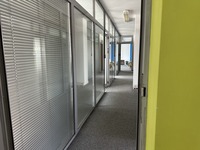 |
Location: Sofia city centre
500 sq. m of functional space, including an open-plan area, private offices, a meeting room, server room, and restroom.
|
|
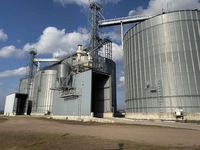 |
Location: Kameno, Burgas region
Area: 12.9 decares
Built-up area: 1,485 m²
Four metal silos with a total capacity of 21,200 m³.
Main equipment: laboratory, scales, service building, and two unloading stations.
|
|
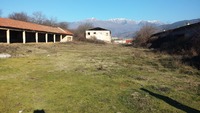 |
Location: Kocherinovo municipality, Kustendil region
13,657 sq. m of consolidated land, with the possibility of changing the parcel’s status for another type of industrial activity.
|
|
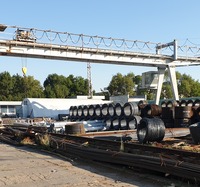 |
Location: Sofia
Operating enterprise with excellent financial results and 14.6 decares of land in an attractive location. It includes three halls (1,600 sq. m total, 11 m high), cranes for loading and unloading (13 t capacity), an administration building (360 sq. m), warehouses, and an operating store.
|
|
|
|
Bulgarian Industrial Association
|
| |
|
World
|
| |
|
Europe |
|
The French energy company TotalEnergies reported a sharp increase in profit for the third quarter of 2026, benefiting from high oil refining margins and heightened demand for liquefied natural gas (LNG). According to the financial results, the company’s adjusted net profit reached $9.1 billion—a 127% increase compared to the same period the previous year. This figure exceeded analyst expectations of approximately $8.3 billion and marks the company's highest result since early 2022. The primary driver of this strong financial performance is the disruption to international energy supplies caused by the war with Iran and the effective closure of the Strait of Hormuz. Supply interruptions from the Middle East have constrained the availability of certain petroleum products, creating conditions for a significant surge in refining profits. For large integrated energy companies—which possess production facilities, refineries, and international trading infrastructure—such an environment can generate exceptionally high revenues. The results from the refining and chemicals division are particularly impressive; its profit reached $3.6 billion—more than five times the figure reported a year earlier. Meanwhile, the volume of processed oil increased by nearly 10%. This indicates that the company is benefiting from both higher margins and increased production activity. The combination of these two factors has made a decisive contribution to the group's overall financial performance. The liquefied natural gas (LNG) business also delivered a strong performance, becoming an increasingly vital component of TotalEnergies' international energy strategy. Profit in this segment reached $1.9 billion, bolstered by a roughly 20% increase in natural gas prices compared to the previous quarter. The company also leveraged its active international gas trading operations, which allowed it to redirect supplies to markets with higher demand. For the European economy, these results carry a dual significance. On one hand, TotalEnergies' robust financial figures demonstrate that European energy companies can maintain high profitability even amidst major international upheavals. On the other hand, the conditions driving these profits also increase costs for businesses that rely on petroleum products and natural gas. Source: Wall Street Journal
|
America |
|
The Brazilian state-owned oil company Petrobras reported a historic record in oil and natural gas production during the third quarter of 2026, solidifying Brazil's position as one of the world's leading producers of energy commodities. According to financial and operational data released by the company, the average daily production of oil, natural gas, and liquid hydrocarbons reached 3.512 million barrels of oil equivalent—an increase of 11.7% compared to the same period in 2025 and 5.3% compared to the previous quarter. This result surpasses the previous production record and indicates a significant acceleration in output within the Brazilian energy sector. The company attributes these record-breaking results primarily to improved equipment efficiency, fewer interruptions for technical maintenance, and the commissioning of new production capacity. The exploitation of so-called "pre-salt" deposits—located beneath thick layers of salt deep below the ocean floor—has also made a significant contribution. In recent years, these deposits have become a primary driver of growth for the Brazilian oil industry. During the third quarter, Petrobras's own production from these fields reached 2.96 million barrels of oil equivalent per day, setting a new record. Furthermore, during this period, the company brought 12 new production wells online—six each in the Santos and Campos basins. Expanding operations has enabled an increase in output without a significant rise in production process interruptions. These record figures are not limited to crude oil extraction alone. Petrobras has also reported exceptionally high activity levels at its refineries, which operated at an average of 99% of their production capacity during the third quarter. Diesel fuel production reached a record 769,000 barrels per day, while domestic sales of petroleum products totaled 1.854 million barrels per day—the highest level since the third quarter of 2021. Diesel sales grew by 14.4% compared to the previous quarter, while sales of aviation fuel increased by 9.9%. These results demonstrate that the company is expanding not only its extraction output but also its capacity to supply the Brazilian economy with fuel. This strong production performance has also impacted international trade. In the third quarter, Petrobras’s crude oil exports reached approximately 987,000 barrels per day, representing a 21.3% year-on-year increase. The company also recorded record total shipments of oil and petroleum products to international markets, supported by improvements in logistics, port infrastructure, and maritime transport operations. In August, a record 37.8 million barrels of oil were loaded for export within a single month. The increase in Brazilian production is particularly significant given the volatility in global energy markets and international supply disruptions linked to the conflict with Iran. Higher output and near-full refinery utilization allow Brazil to mitigate some of the impact of international energy shocks on its domestic market. Source: Rio Times
|
Asia |
|
South Korea is on track to record its fastest annual export growth since January 1974, driven by massive global demand for semiconductors, investments in artificial intelligence, and rising prices for memory chips. Exports from Asia’s fourth-largest economy are expected to grow by 93.2% year-on-year in October, following an 83.7% increase in September. The primary driver of this impressive performance is the semiconductor industry, which is becoming an increasingly vital factor in the country’s economic development. The rapid construction of data centers, the expansion of cloud infrastructure, and the deployment of artificial intelligence systems are boosting the consumption of high-performance memory chips. South Korean manufacturers Samsung Electronics and SK Hynix are among the main beneficiaries of this trend. In the third quarter alone, SK Hynix reported a more than sevenfold increase in profit compared to the same period last year. The scale of this export surge is also evident in preliminary customs data. Between October 1 and 20, South Korean exports reached approximately $61.6 billion—a 105.4% year-on-year increase. Semiconductor exports for the same period amounted to about $27.5 billion, accounting for nearly 45% of total shipments. This demonstrates the extent to which the country's economic performance depends on the global technology sector. This positive trend is gradually extending to other industries as well. Beyond semiconductors and computer equipment, economists note improving prospects for the automotive sector and the manufacturing of wireless communication devices. According to analysts, the rise in exports is driven not only by higher selling prices but also by an actual increase in export volumes. This has a direct impact on economic growth, with South Korea’s Gross Domestic Product (GDP) expanding by 1% in the third quarter compared to the previous one. Despite these strong results, economists caution that part of the unusually high year-on-year growth can be attributed to calendar effects. In October 2026, South Korea had 22 working days—compared to 20 in the same month the previous year—due to the timing of the Chuseok holidays. This, combined with a lower base for comparison, has inflated the reported growth rate. For South Korea, the current tech boom presents both a major economic opportunity and a strategic risk. Strong demand for chips generates new revenue, drives investment in production capacity, and bolsters economic growth. At the same time, however, it increases the country’s reliance on a limited range of high-tech products and on global investment in artificial intelligence. A potential slowdown in spending on data centers or a decline in semiconductor prices could have a significant impact on production and exports. 
|
|
Indexes of Stock Exchanges
29.10.2026 |
| Dow Jones Industrial |
| 52 833.40 |
(-78.00) |
| Nasdaq Composite |
| 2 618.00 |
(-365.13) |
Commodity exchanges
29.10.2026 |
|---|
| |
Commodity |
Price |
|
| Light crude ($US/bbl.) | 104.41 |
| Heating oil ($US/gal.) | 4.6052 |
| Natural gas ($US/mmbtu) | 3.0208 |
| Unleaded gas ($US/gal.) | 3.1026 |
| Gold ($US/Troy Oz.) | 3 991.73 |
| Silver ($US/Troy Oz.) | 51.27 |
| Platinum ($US/Troy Oz.) | 1 458.00 |
| Hogs (cents/lb.) | 62.39 |
| Live cattle (cents/lb.) | 22 765.60 |
|
|
|
Toplika Mineral Springs |
|

The Toplika mineral springs are situated in the Toplika region, about 4 km away from the town of Gotze Delchev. They are about 10 in number. Their waters don’t freeze even in the cold winter days and have a constant temperature of about 22 degrees C. The area, where the springs are located, is very picturesque. A beautiful acacia forest surrounds the springs, offering a great panoramic view to the Lyaskovski summit situated opposite to them. The remains of an ancient fortress could be seen in direct proximity to the springs.
Location
|
Archive
Business Industry Capital |
|


 Български



